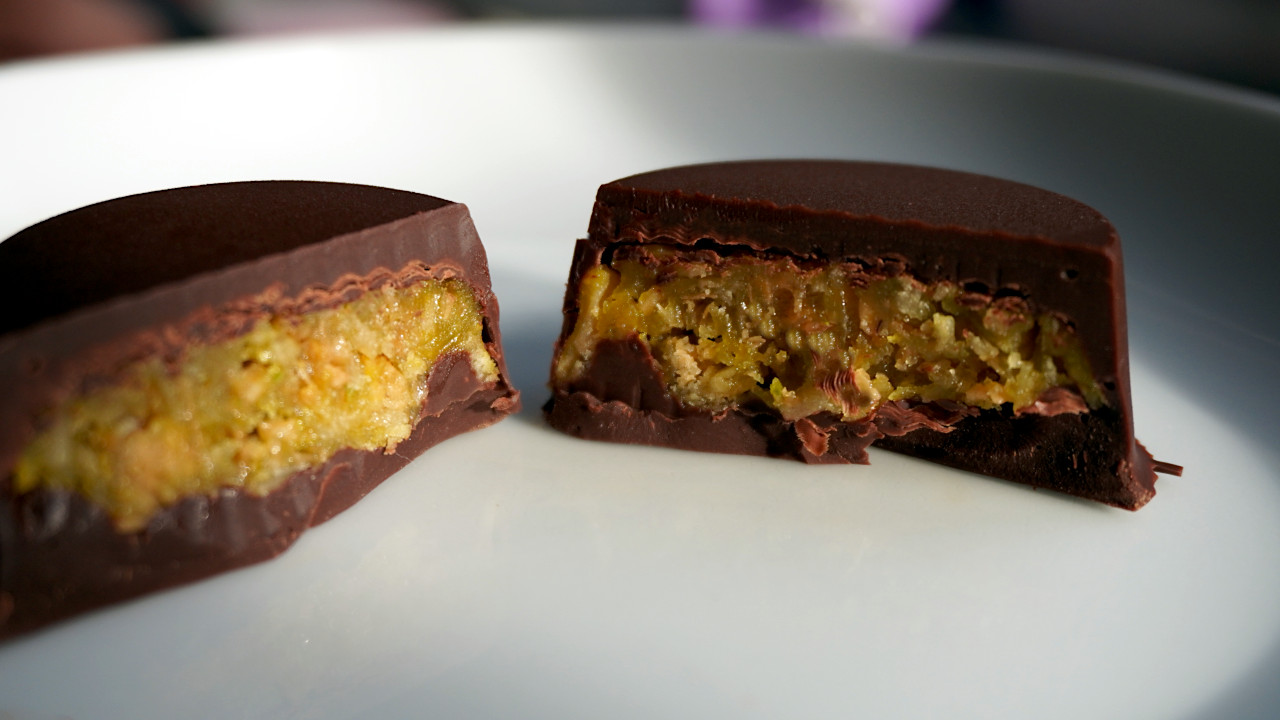
Dubai’s Fix Dessert Chocolatier, popularized a delicious fusion of ancient ingredients and contemporary luxury.
Let’s examine this viral sensation, explore the provenance of its components and guide you on how to replicate it in your own kitchen.
Traditional ingredients, luxe flavour
The genius of Dubai chocolate lies in its contrasts: the smooth, melting chocolate shell against the crispy, nutty, and complex filling. This filling is a masterclass in ingredient synergy, with each component carrying the flavours of history.
Kunafa pastry
The signature crunch comes from toasted kunafa. This is essentially phyllo dough spun into delicate, vermicelli-like threads. Baklavas and other Mediterranean / Levantine sweets use this form of pastry.
Kunafa has been a celebratory food for centuries, a staple of feasts during Ramadan and other joyous occasions. The fine threads of dough are traditionally combined with butter or ghee and then baked or fried to a spectacular golden crispness.
By incorporating the pastry into a chocolate bar, modern chocolatiers use a traditional texture to cater for a global audience.
Pistachio and tahini
The vibrant green that peeks out from the broken bar comes from pistachios, native to the arid regions of Persia (modern-day Iran) and Central Asia.
The pistachio was a jewel of the ancient world, cherished by royalty and traded extensively along the Silk Road. The Middle East’s climate provides the perfect terroir for growing pistachios.
Often, this pistachio paste is blended with tahini, another staple of Middle Eastern cuisine. Tahini is a paste made from toasted and ground sesame seeds, and its nutty, slightly bitter notes are the perfect foil to the sweetness of chocolate and the richness of pistachio, adding an incredible depth of flavour to the filling.
A delicate chocolate shell
The original recipe of Dubai chocolate calls for using milk chocolate for the shell of the tablet.
In our tests at Random Chocolates while creating our “hacked Dubai chocolate”, we found that a dark chocolate with a cocoa mass content around 60% produces the best results in terms of flavour and contrast with the ingredients of the filling.
But if you prefer sweet, feel free to go with a quality milk chocolate of 30% cocoa mass. The result will be equally amazing.
Recipes for Dubai chocolate
We have two recipes: one for the original version -with more ground work and preparation- and one hacked speedy version: if you live near a Lebanese / Greek / Middle Eastern bakery, you can quickly create a respectable Dubai chocolate with minimal effort.
Original version
Ingredients
For the filling:
- 100g kunafa (kadaifi) pastry, fresh or frozen. Available at Middle Eastern or Mediterranean grocers, or online.
- 50g unsalted butter or ghee, melted.
- 150g high-quality pistachio paste. If unavailable, you can use 120g of tahini mixed with 30g of finely ground roasted pistachios. Snack-type salted pistachios are not suitable for this.

For the shell:
- 300g high-quality milk chocolate (30% or more). We used dark couverture (65%) instead.
- A suitable polycarbonate or silicone mold: deep enough for the ingredients. A mold for bars or tartlets works best. The mold can be painted before use.
Method
1. Toast the kunafa
If your kunafa is frozen, thaw it first.
Preheat your oven to 180∘C (350∘F).
Using your fingers, pull apart the strands of kunafa and chop them into small, roughly 1-2 cm pieces. Place in a bowl and pour the melted butter or ghee over them. Toss thoroughly with your hands until every strand is coated. Spread the kunafa in a thin, even layer on a baking sheet.
Bake for 10-15 minutes, tossing halfway through, until it is a deep golden brown.

2. Make the filling
In a bowl, combine the pistachio paste (or tahini pistachio mix) with the cooled, toasted kunafa. Mix gently until the kunafa is evenly distributed throughout. The result should be thick and textured.

3. Temper the chocolate
The easiest home method is the "seeding" method using a microwave:

- Chop your chocolate finely. Set aside about one-third of it.
- Place the remaining two-thirds in a microwave-safe bowl. Microwave in 20-second intervals, stirring in between, until it is completely melted. Be careful not to burn it.
Your target temperature is around 45−50∘C (113−122∘F) for dark chocolate or 40−45∘C (104−113∘F) for milk chocolate.
- Add the remaining one-third of chopped chocolate (the "seed") to the melted chocolate. Stir continuously until it is fully melted and the mixture has cooled.
Assemble
- Pour half of the tempered chocolate into your molds. Ensure the chocolate coats the bottom and sides of each cavity completely.
- Place the mold in the refrigerator for 5-10 minutes, just until the chocolate shell is set.
- Remove from the fridge and spoon the kunafa-pistachio filling into the molds, pressing it down gently. Leave a small gap at the top.
- Pour the remaining tempered chocolate over the filling to seal the bars. Gently tap the mold on the counter to level the chocolate and release any air bubbles.
- Place the mold back in the refrigerator until the chocolate is fully hardened. Overnight works best.
Hacking Dubai chocolate
You can purchase prepared pistachio paste and kunafa sweets, like “lady fingers” or “pistachio bird’s nests” from a Middle Eastern bakery.
You only require some melted butter to incorporate the broken strands of pastry into the pistachio paste. The chocolate shell is prepared as in the original method.
Break the sweets carefully so the pastry does not pulverize. Remove the nuts or pistachios from the sweets with a tea spoon, and spoon the kunafa and pistachio paste you prepared into the chocolate shells in the molds.
This hack has been tested by us and it works very well.
If you are short on time and eager to impress guests we suggest you give it a try!
Conclusion
The final step is to take a Dubai chocolate out of the fridge, let it come to room temperature and break it in half.
Listen for that lovely crunch and enjoy the amazing taste of a global sensation that you created in your own kitchen.