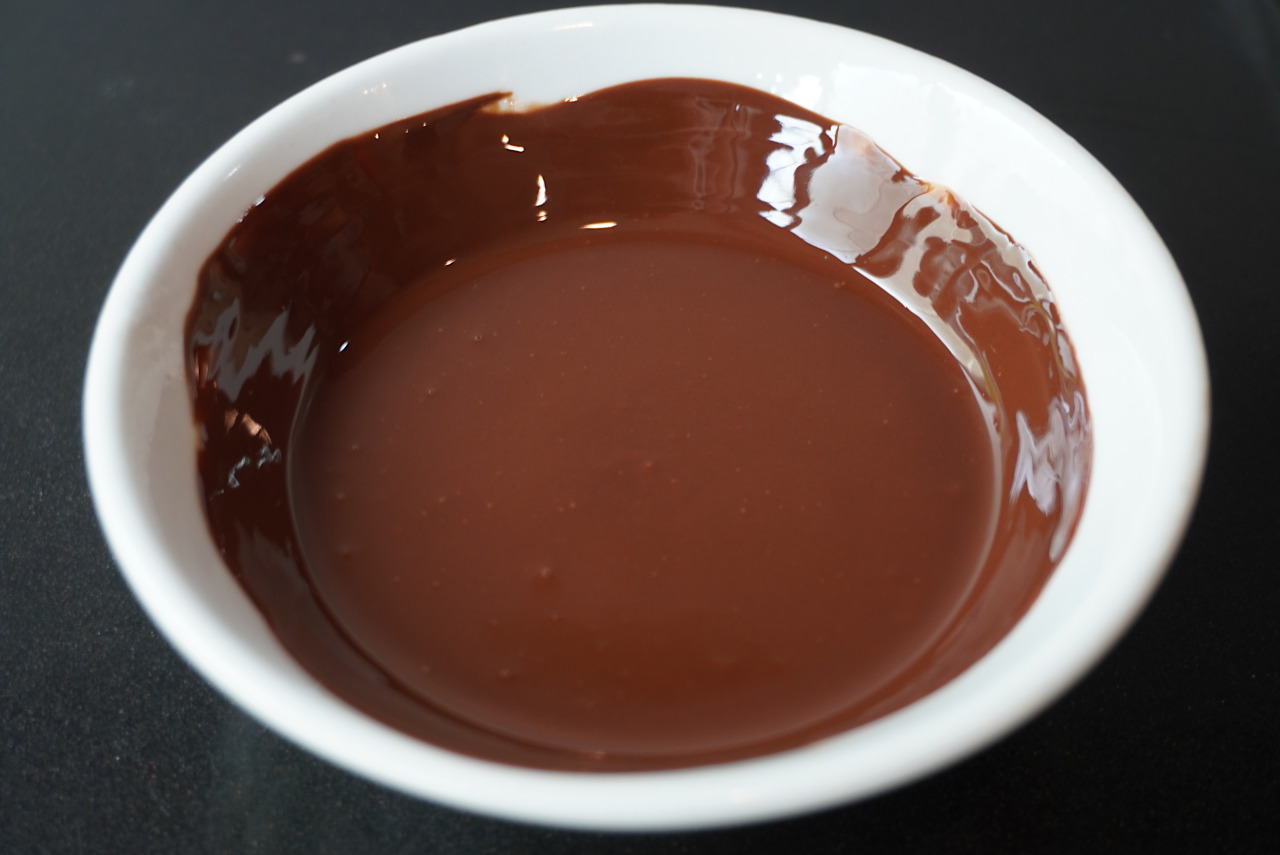
The silky filling is the heart and soul of a gourmet bonbon. Tradition says that the name comes after an “idiot” apprentice yelled at by his boss in a confectionery shop in Paris during the XIX century.
Mastering the creation of ganache is one of the goals of the semi-professional home chocolate artist. Creating a good ganache demands an understanding of ingredients and kitchen methodologies, a flair for adventurous flavor pairings, and a keen eye for detail.
In food chemistry ganache is an emulsion of fat and water -most of the time, chocolate and cocoa butter provide the fat, whilst a dairy product like cream or milk provides the water.
The ratio of these two primary ingredients is critical for the final texture.
Generally for bonbon fillings, a ratio of two parts chocolate to one part cream by weight (2:1) is a good starting point for a firmer ganache, while a 1:1 ratio yields a softer, fluid texture. Butter may also be added in small quantities to impart “mouthfeel” to the ganache.
A basic ganache
The following is a soft hazelnut ganache that can be used as starting point in the home kitchen for filling bonbons. Its consistency is soft and can be adjusted to a firmer (or to a more fluid) by changing the ratio between cocoa butter, chocolate and cream.
- 100 grams, white chocolate: for best results use a high-quality Barry or Callebaut white chocolate.
- 60 grams, heavy cream: as we mentioned elsewhere, a good quality cream (more than 30% milk fat) will make a significant improvement to your product.
- 10 grams, cocoa butter: this will improve fluidity and help dissolve fat crystals from the chocolate
- Aromatics and flavours: for this ganache we use 20grs of hazelnut filling paste. Depending on the concentrations of the flavouring, you may use a different amount that you can balance out by adding cream.
The method of preparation is straightforward:
- Weigh all ingredients separately. For this recipe, the hazelnut, cocoa butter and white chocolate can be placed in one ceramic bowl and the cream in a separate microwave-proof bowl.
- Warm the heavy cream in the microwave for 20 seconds at a time until it reaches 70 degrees Centigrade (158 degrees F) . Caution: do not overheat as boiling will ruin the cream.
- Pour the warm cream on the bowl with the chocolate and let stand for a couple of minutes. Afterwards stir to combine all ingredients into the ganache. Ensure that the ganache is homogenous and smooth. If needed you can smooth the consistency by adding cream, one teaspoon at a time.
- At this point you can take the bowl to a cooler location and cover with a wet kitchen towel. Stir occasionally while it cools down, to prevent a crust from forming.
- Once the ganache is cool enough to be handled, transfer to a piping bag or “squeeze bottle” to be used in filling out the bonbons.
Final Thoughts
You can use this recipe as a starting point for a quality bonbon that is easy to make in your kitchen, and will give you an understanding of the challenges of working with ganache: the heart of bonbons.
Your curiosity is the first ingredient of a masterpiece.
Do not be afraid to steep, taste, and create